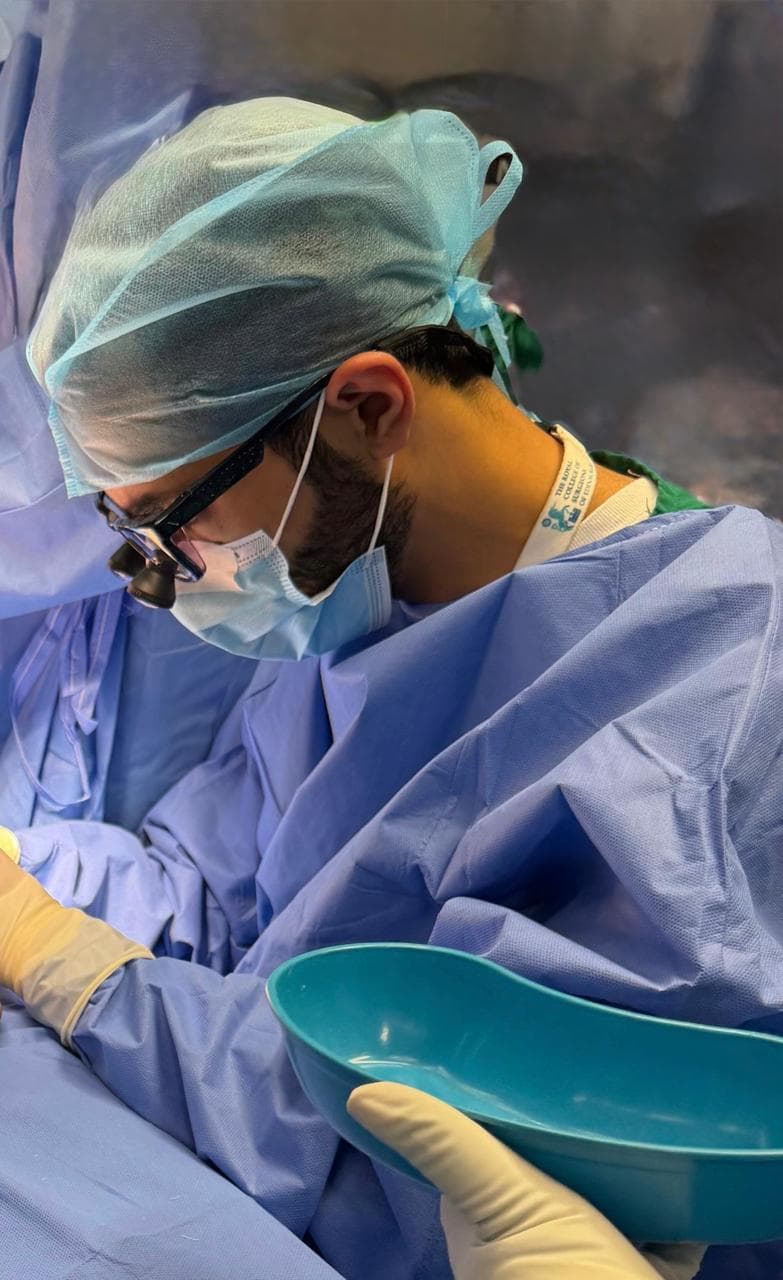
Resection of a Large Retrosternal Goiter Extending into the Chest Without Sternotomy
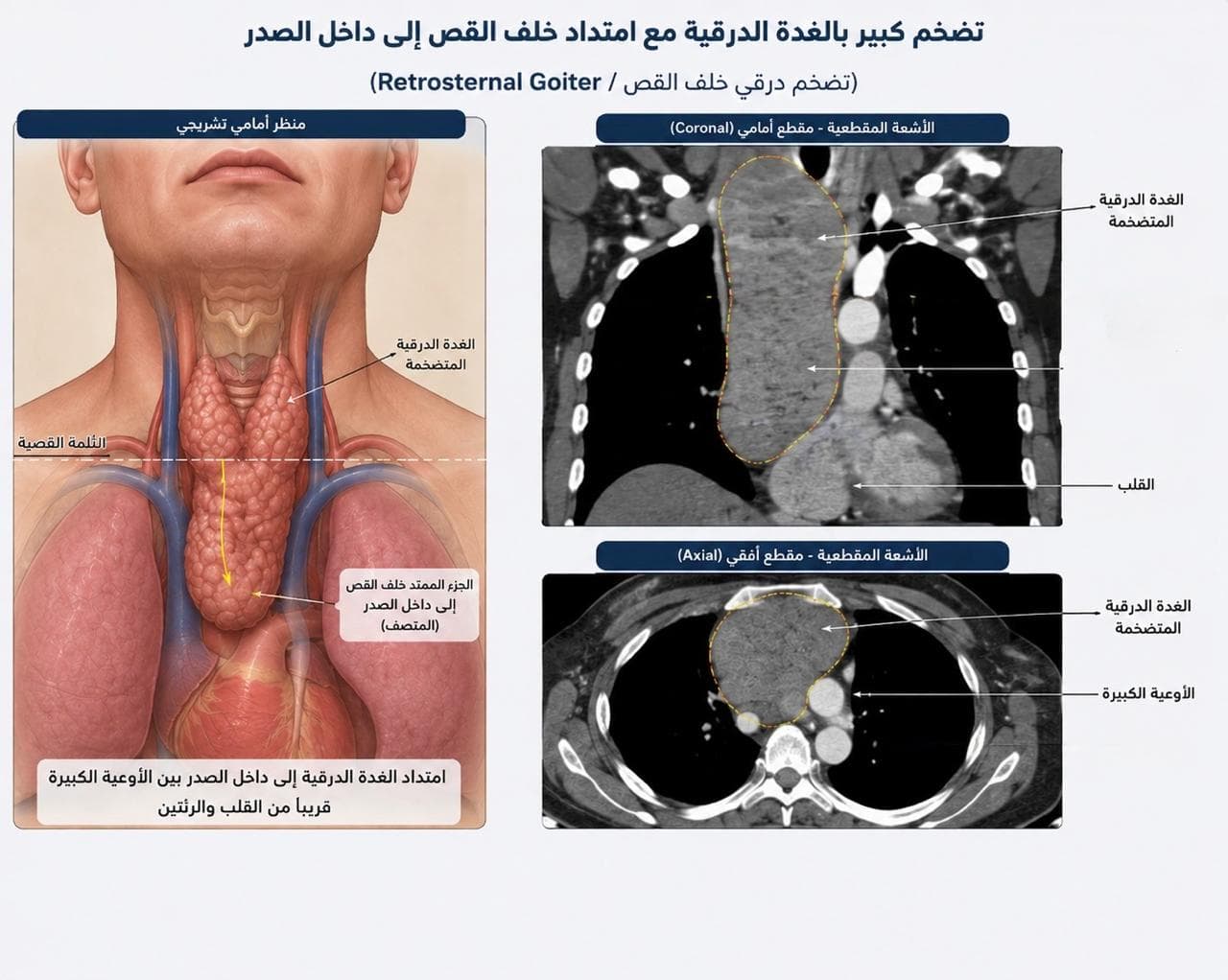
A patient presented to the clinic with a multinodular thyroid enlargement causing compressive symptoms on the esophagus and airway. Ultrasound imaging showed the nodules to have a benign appearance; however, CT imaging revealed that a large portion of the gland extended into the chest (retrosternal goiter), reaching the mediastinum, passing behind the major blood vessels, and approaching the heart and lungs.
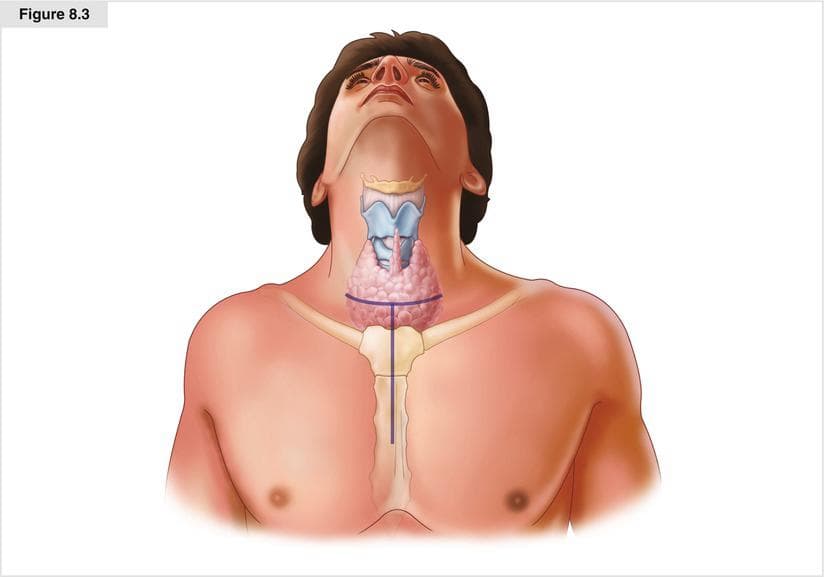
This type of enlargement is considered a complex surgical case, as it may, in some patients, require opening the sternum (sternotomy) to safely access and remove the intrathoracic portion — particularly when it lies deep or adjacent to vital structures.
After careful case review and surgical planning, the patient underwent a total thyroidectomy. Thanks to God, the entire gland was successfully removed — including the portion extending deep into the chest — through a small surgical incision in the neck only, without the need to open the sternum.
During the procedure, particular care was taken to ensure:
- Complete resection of the thyroid gland.
- Safe removal of the intrathoracic extension.
- Preservation of both recurrent laryngeal nerves, responsible for vocal cord movement.
- Preservation of all parathyroid glands, responsible for regulating calcium levels in the body.
- Avoidance of any surgical intervention on the sternum or rib cage.
Thankfully, the surgery was successful and the patient recovered excellently, with no change in voice or drop in calcium levels. The drainage tube was removed the following day, and the patient was discharged in good health.
Awareness Message
Not every thyroid enlargement means cancer — many cases of thyroid and nodular enlargement are benign. However, neglecting an enlargement may allow it to gradually extend into the chest, potentially compressing the trachea, esophagus, or blood vessels, and causing symptoms such as: - Shortness of breath - Difficulty swallowing - A sensation of pressure or heaviness in the neck or chest - Voice changes in some cases Early evaluation and follow-up with a surgeon specialized in thyroid surgery help determine the right timing for surgery, and increase the chances of performing it safely through a small incision — while preserving the nerves and parathyroid glands, and avoiding the need to open the chest in most cases. This case has been published after removing all information that could reveal the patient's identity, with the aim of medical education and raising awareness, while fully preserving patient privacy.